Closing the Housing Gap: How Data-Driven Multi-Unit Housing Can Transform Communities
The housing crisis is real. With an estimated shortage of 1.5 to 5.5 million units nationwide, everyone from city halls to state capitals to big businesses is racing to figure out how to solve it. The thing is, we can’t just keep building more single-family homes. We need to think bigger, denser, and smarter. It’s about getting strategic with multi-unit housing, smarter densification, and creative repurposing of commercial and retail properties.
Demographic data is the secret weapon that’ll help devise a new way forward. Instead of guessing where housing demand is highest, developers and local governments can use census data, EASI analytics, and internal real estate metrics to identify exactly where these projects are needed and will succeed.
The Multi-Unit Housing Reality Check
Buildings with between 5 and 19 units made up just 2.28% of new housing starts, while those with 20+ units represented 22.3% of starts. Homes with five units or more made up 32.3% of new housing starts. The data is clear: we’re already building multi-unit housing, but we need to be smarter about where and how it’s done.
Among multi-unit residential buildings, only 6.50% are built with the intent to sell units. The other 93.5% are built to be rentals. This tells us something important about market demand and financing structures. With the median age of renters in multifamily housing at approximately 34 years old, we’re looking at millennials and younger Gen Xers who value flexibility and urban accessibility.
Here’s the kicker: approximately 60% of all multifamily units are located in urban areas. That concentration creates opportunities for municipalities and developers who understand where the remaining 40% should go.
Strategic Repurposing: Beyond Empty Office Buildings
Commercial-to-residential conversions are projected to create 70,700 apartment units in 2025. That’s great to see because these adaptive reuse projects are nearly 20% cheaper than new construction and offer more housing.
The success stories are fascinating. Philadelphia converted over 8 million square feet of space in more than 40 office buildings between 2000 and 2020, resulting in a 54% boost in the city center’s population. In 105 of America’s largest cities, 15% of commercial office buildings could be used for adaptive reuse, potentially adding 171,470 housing units.
But here’s where it gets really interesting. Some of the most creative conversions are happening in unexpected places and with unexpected real estate. Developers purchased a 2,400-acre prison site in Fairfax County, Virginia, and converted the cellblocks into homes, apartments, and commercial spaces, adding green spaces, schools, and an arts center.
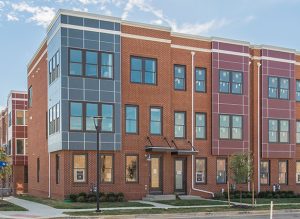
Photo by Alexander Company
Using Data to Identify Prime Locations
This is where demographic intelligence separates successful projects from expensive mistakes. Not every empty building is worth converting into housing. You need to understand who lives where, what they need, and how they’re likely to change over time.
EASI’s demographic data reveals patterns that census numbers alone can’t capture. Each group has different housing preferences and location priorities. So, for example, an EASI Quick Table – Life Stage by Income Report within 15 miles of ZIP code 59001 in Montana (Absarokee, MT) shows that there are more Nearly Senior (55-64) and Senior (65-74) age families with no children with higher and moderate income than anything else. This is likely a suitable area for smaller housing options, such as those with three bedrooms or fewer.
In ZIP code 59069 (Reed Point, Montana), however, the situation changes. Here, there are more Middle (35-44), Late Middle (45-54), and Nearly Senior (55-64) age families with no children with higher and moderate income. Single-family detached homes might be a better option here, whether they’re purpose-built or conversions of other real estate assets.
Combining census data with EASI demographics data and analysis helps you identify:
- Areas with growing adult populations who are likely renters
- Communities with aging infrastructure that could support densification
- Neighborhoods experiencing demographic shifts that create new housing demand
- Commercial districts with underutilized buildings suitable for conversion
Your internal real estate data adds another layer. Property performance metrics, tenant demographics, and local market trends help validate the data’s findings.
Municipal Strategies: Beyond Zoning Changes
Municipalities, cities, and state governments can look beyond simply allowing more multi-unit development. It’s about strategic planning that aligns housing policy with demographic realities and existing infrastructure.
Consider Minneapolis, which removed the requirement for public hearings for conversion projects. San Francisco updated its building codes and revised its planning code to facilitate conversions. New York City enacted a property tax exemption program in 2024 to mandate income-restricted units in neighborhoods that are otherwise hard to reach. The program requires that 25% of apartments be reserved for families earning an average of 80% of the area median income and be rent-controlled in perpetuity.
These aren’t just regulatory changes. These governments are finally recognizing that traditional housing development isn’t meeting the current demand. So smart municipalities are using demographic data to:
- Identify neighborhoods where multi-unit housing would relieve pressure on existing areas
- Plan infrastructure improvements that support higher-density development
- Create incentive programs that encourage conversion in areas with the right demographic mix
- Coordinate with developers who understand local market conditions
Commercial Company Opportunities
For commercial real estate companies, the housing gap represents a massive market opportunity. But success requires understanding both the supply side (what buildings can be converted) and the demand side (who needs housing and where).
The key is identifying markets before they become obvious. EASI’s five-year demographic projections help spot emerging opportunities and are included in most report options. Companies that combine demographic insights with building assessment capabilities will capture the best opportunities. They’ll understand not just which buildings can be converted, but which conversions will succeed in that area.
The Integration Advantage
The most successful housing projects will combine multiple data sources to achieve a comprehensive understanding of the market. Census data provides the foundation; EASI’s analytics, provided by demographic experts, add behavioral and lifestyle insights; and your internal real estate data offers the local performance context. It’s a winning combination that helps answer critical questions, such as:
- Where is housing demand growing fastest?
- What types of units does the local demographic mix prefer?
- Which commercial buildings have the right characteristics for residential conversion?
- How will local demographics change over the next five years?
- What amenities and features will attract target renters?
For example, if the data indicates a growing population of young professionals in an area with underutilized office buildings, consider converting some unused commercial offices. If you see aging suburban demographics near solid commercial strips, consider creating senior-friendly multi-unit housing or other community hubs.
Looking Forward
The housing shortage won’t solve itself, but strategic multi-unit development and commercial repurposing can make a significant dent. The projects that succeed will be those based on solid demographic intelligence rather than assumptions about housing demand.
Whether you’re a municipality planning for growth, a state government addressing housing policy, or a commercial company looking for opportunities, the key is starting with data. Understanding who needs housing, where they want to live, and how those preferences are evolving provides the foundation for informed development decisions.
Contact EASI for more information on your chosen location or area. We’re here to help you discover the hidden gems that can serve new purposes.
Share on Facebook Share on Twitter Share on Pinterest